In a segment on hell in Hieronymus Bosch's painting of THE GARDEN OF EARTHLY DELIGHTS, there's a man with music notation on his butt. This has been transcribed and played by various artists. The version by James Spalink, played on lute, harp, and hurdy-gurdy, is creepy & cool.
Showing posts with label art. Show all posts
Tuesday, 25 July 2023
Tuesday, 28 February 2023
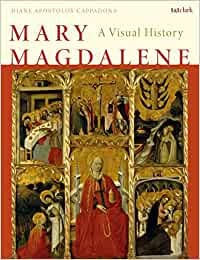
Book Review: Mary Magdalene: A Visual History by Diane Apostolos-Cappadona
Pros: lots of photos, highly informative
Cons: a bit repetitious
Mary Magdalene is a fascinating saint. From simple origins, a few mentions in the New Testament, to becoming amalgamated with other New Testament Marys, to having a variety of stories about where she spent her later years (Ephesus or France), being a sinner, a penitent, a preacher, a feminist icon, her story is constantly evolving.
The book starts with an introduction before separating into two parts. Part One: Towards a Visual History, consists of 7 chapters (Scripture Sources, Patristic Sources, Eastern Christian Narratives & Traditions, Western Christian Narratives & Traditions, Symbols & Devotions, Mary Magdalene through Christian Art, and Coda). This part examines what the scriptures say about the various Marys that were amalgamated into the story of Mary Magdalene and how ‘her’ story was depicted in art through the years. The second part, Motifs, consists of 10 chapters that analyzed specific aspects of Mary Magdalene, and how those were depicted in art (Sinner/Seductress, Penitent, Anointer, Weeper, Witness, Preacher, Contemplative, Reader, Patron, and Feminist Icon). These are short chapters, of 3 to 5 pages each, with 1 to 2 photographs highlighting their subject. The book concludes with an afterward that mentions exhibitions focused on Mary Magdalene and a select bibliography for further reading.
I found the introduction fairly repetitive and a bit harder to parse than the rest of the text. Part one had some great foundation information about how Mary’s story began and developed. It was really interesting seeing how parts of her legend came about. The chapters were thorough and easy to read. While each chapter in part 2 was short, the author packed a lot of great information into them, including mentions of her in early Christian and apocryphal writings. There’s some repetition here as well, though I suspect it’s so each chapter stands on its own. There were occasional page notes with sources for other articles and books to read for more information and a few explanatory notes.
The book has a lot of excellent colour photographs that demonstrate the points the author is making. They cover the variety of motifs Mary Magdalene was used to represent, as well as the various periods during which she has been worshipped.
If you’re interested in Christian saints in general or Mary Magdalene in particular, it’s a fantastic book.
Cons: a bit repetitious
Mary Magdalene is a fascinating saint. From simple origins, a few mentions in the New Testament, to becoming amalgamated with other New Testament Marys, to having a variety of stories about where she spent her later years (Ephesus or France), being a sinner, a penitent, a preacher, a feminist icon, her story is constantly evolving.
The book starts with an introduction before separating into two parts. Part One: Towards a Visual History, consists of 7 chapters (Scripture Sources, Patristic Sources, Eastern Christian Narratives & Traditions, Western Christian Narratives & Traditions, Symbols & Devotions, Mary Magdalene through Christian Art, and Coda). This part examines what the scriptures say about the various Marys that were amalgamated into the story of Mary Magdalene and how ‘her’ story was depicted in art through the years. The second part, Motifs, consists of 10 chapters that analyzed specific aspects of Mary Magdalene, and how those were depicted in art (Sinner/Seductress, Penitent, Anointer, Weeper, Witness, Preacher, Contemplative, Reader, Patron, and Feminist Icon). These are short chapters, of 3 to 5 pages each, with 1 to 2 photographs highlighting their subject. The book concludes with an afterward that mentions exhibitions focused on Mary Magdalene and a select bibliography for further reading.
I found the introduction fairly repetitive and a bit harder to parse than the rest of the text. Part one had some great foundation information about how Mary’s story began and developed. It was really interesting seeing how parts of her legend came about. The chapters were thorough and easy to read. While each chapter in part 2 was short, the author packed a lot of great information into them, including mentions of her in early Christian and apocryphal writings. There’s some repetition here as well, though I suspect it’s so each chapter stands on its own. There were occasional page notes with sources for other articles and books to read for more information and a few explanatory notes.
The book has a lot of excellent colour photographs that demonstrate the points the author is making. They cover the variety of motifs Mary Magdalene was used to represent, as well as the various periods during which she has been worshipped.
If you’re interested in Christian saints in general or Mary Magdalene in particular, it’s a fantastic book.
Labels:
art,
Book Review,
Christianity,
Diane Apostolos-Cappadona,
Mary Magdalene,
saints
Tuesday, 21 December 2021
Book Review: Drawn on the Way by Sarah Nisbett
Art like many topics is subjective, and so learning how to do art will be different for everyone. I was hoping the author’s more relaxed ‘no rules’ version of learning to draw would work for me in ways that some other learn how to draw guides have not. Unfortunately, while I liked some of the principles the author professed, her style of learning did not work for me either.
I greatly appreciated the section on starting something new, that you need to ignore negative thoughts in order to simply create. The act of making art should bring joy, regardless of what the end result looks like.
I also thought the idea of starting an image with the ‘hook’ (the thing that first catches your eye) and then using that element as the scale for the rest of the image was a good technique and she explains several other clever tricks for making things look more realistic.
But the practical aspects of the book didn’t mesh with my style of drawing. I don’t like the limits imposed by some exercises used, like trying to draw an image without looking at your paper. While I can understand the point of the exercise is to make you focus on the subject and not get hung up on the end result, for me these exercises are more frustrating then helpful as I’m left with a bunch of lines that don’t look anything like the subject.
The chapters are short with only a few paragraphs explaining each lesson and in a few cases I felt that I still didn’t quite understand how to do what was being asked. Especially in one of the early lessons about interrogating the subject when determining what to draw. I couldn’t wrap my head around the idea of asking a still life subject ‘what happens next’?
Everyone learns differently so the fact that this book didn’t quite work for me shouldn’t discourage you from checking it out.
I greatly appreciated the section on starting something new, that you need to ignore negative thoughts in order to simply create. The act of making art should bring joy, regardless of what the end result looks like.
I also thought the idea of starting an image with the ‘hook’ (the thing that first catches your eye) and then using that element as the scale for the rest of the image was a good technique and she explains several other clever tricks for making things look more realistic.
But the practical aspects of the book didn’t mesh with my style of drawing. I don’t like the limits imposed by some exercises used, like trying to draw an image without looking at your paper. While I can understand the point of the exercise is to make you focus on the subject and not get hung up on the end result, for me these exercises are more frustrating then helpful as I’m left with a bunch of lines that don’t look anything like the subject.
The chapters are short with only a few paragraphs explaining each lesson and in a few cases I felt that I still didn’t quite understand how to do what was being asked. Especially in one of the early lessons about interrogating the subject when determining what to draw. I couldn’t wrap my head around the idea of asking a still life subject ‘what happens next’?
Everyone learns differently so the fact that this book didn’t quite work for me shouldn’t discourage you from checking it out.
Tuesday, 7 December 2021
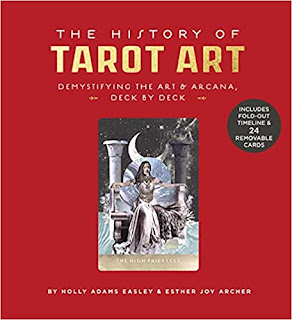
Book Review: The History of Tarot Art: Demystifying the Art and Arcana, Deck by Deck by Holly Adams Easley and Esther Joy Archer
Pros: lots of illustrations, sticks to verifiable history, engaging
Cons: images of a few discussed cards not included
Note: I received a review copy of the ebook from Netgalley and therefore cannot comment on the removable Sola-Busca tarot cards or fold-out tarot timeline that the physical book comes with.
The History of Tarot Art takes you on a journey of the most influential tarot decks. After a short introduction there are 12 chapters on specific tarot decks, followed by a chapter that showcases several contemporary decks. Then there’s a quick epilogue and an appendix where the authors explain how to do a tarot reading and provide 2 spreads for beginners.
Each chapter talks about the history of that deck, who the artist was and why the deck was created. In a few cases other artworks by the artist are included so you can see their general style. The artists also explain the wider influence of the decks and offer a few suggestions of other decks you might like if that style of art speaks to you.
In the introduction the authors make it clear that they are only including verifiable history, no ‘fakelore’. I really appreciated the amount of research that went into this book and how ideas about tarot developed from playing cards to cards for divination purposes.
There are a lot of illustrations in the book, mostly specific tarot cards from the decks discussed and recommended. In a few places the authors spoke about specific cards that did not show up in the book, which was unfortunate. There were also a few places where the formatting of the book meant the authors spoke about one specific card, like the sun card, and a different deck’s sun card appeared on that page, which was a bit confusing.
It’s fascinating to see how styles changed over time and how various artists created their own decks to address the fact that the current decks didn’t speak to them or show them as practitioners (so feminist and more inclusive decks that made the esoteric content more accessible).
On the whole this is a fantastic book if you’re interested in the art and history of tarot cards.
Cons: images of a few discussed cards not included
Note: I received a review copy of the ebook from Netgalley and therefore cannot comment on the removable Sola-Busca tarot cards or fold-out tarot timeline that the physical book comes with.
The History of Tarot Art takes you on a journey of the most influential tarot decks. After a short introduction there are 12 chapters on specific tarot decks, followed by a chapter that showcases several contemporary decks. Then there’s a quick epilogue and an appendix where the authors explain how to do a tarot reading and provide 2 spreads for beginners.
Each chapter talks about the history of that deck, who the artist was and why the deck was created. In a few cases other artworks by the artist are included so you can see their general style. The artists also explain the wider influence of the decks and offer a few suggestions of other decks you might like if that style of art speaks to you.
In the introduction the authors make it clear that they are only including verifiable history, no ‘fakelore’. I really appreciated the amount of research that went into this book and how ideas about tarot developed from playing cards to cards for divination purposes.
There are a lot of illustrations in the book, mostly specific tarot cards from the decks discussed and recommended. In a few places the authors spoke about specific cards that did not show up in the book, which was unfortunate. There were also a few places where the formatting of the book meant the authors spoke about one specific card, like the sun card, and a different deck’s sun card appeared on that page, which was a bit confusing.
It’s fascinating to see how styles changed over time and how various artists created their own decks to address the fact that the current decks didn’t speak to them or show them as practitioners (so feminist and more inclusive decks that made the esoteric content more accessible).
On the whole this is a fantastic book if you’re interested in the art and history of tarot cards.
Labels:
art,
Book Review,
History,
Tarot
Friday, 19 January 2018
Faras Frescoes
In 1959 prior to the construction of Aswan dam, UNESCO appealed to governments and archaeologists to help save historic sites that would be flooded by the lake the dam created. There was a concerted effort to save as much as they could
Polish archaeologist,Professor Kazimierz Michałowski’s team uncovered a buried Nubian Christian cathedral. Conservators from the National Museum in Warsaw along with the professor’s team managed to detach numerous walls, saving 150 paintings (tempura painted on dry mud plaster, called the Faras frescoes) as well as other artifacts from the remains of the buildings surrounding the church.
As previously agreed, the findings were divided between Poland and Sudan. In 2014 the National Museum of Warsaw reopened the Faras gallery, now designed to evoke the look and feel of the church the artefacts were from.
This google culture online exhibit explains the story and shows several images as well as a few videos. For more information, check out the Faras gallery website.
(image) National Museum of Warsaw Faras Gallery - St Anne fragment
I've seen some readers complain in the past about the number of science fiction books that uncover previous societies. What these readers fail to consider is the fact that all societies - unless you're talking about a new colony on a world without any sort of previous intelligent species - is built on the ruins of the past, often quite literally. Many important European cities have layers and layers of older cities beneath them. So it makes sense for characters in books to stumble across ruins, depending on the circumstances of the story. if nothing else, it shows that the world/universe has a history.
Labels:
art,
Faras,
online exhibit
Friday, 6 October 2017
Nuit Blanche 2017
In addition to the Netflix Red Forest installation, here are some other things my husband and I saw at this year's Nuit Blanche in Toronto. This year's theme was "Many Possible Futures" so there was a definite SF twist to some of the exhibits.
The first one we went to was the Nature Deficit Disorder Clinic. After meeting with reception we got to look at the various posters explaining the dangers of this future where interacting with nature is at a destructive minimum. Brought into the first treatment room, we watched a short video that led to us deciding if we were best served by interacting with a tree, water, or rock. We could see other treatment rooms where some people were given a second 'treatment' with those items, but were told we didn't require immediate treatment and were sent on our way.
On the left is Manitowapow,
speaking to the moon, an exhibit with dome tents lit up with nature scenes instide.
On the right is Laxa’ine’ gigukwdzikasi’ gigukwas Hayałiligase’, The Many Large Houses of the Ghosts, a light display on Old City Hall's clock tower.
There were several cool things to see here, like an audio modulated gas fire display (more base = higher fire).
Nuit Blanche: Photon Gallery 3.0 fire from Jessica Strider on Vimeo.
They also had a strobe powered falling water display.
Nuit Blanche: Photon Gallery 3.0 water from Jessica Strider on Vimeo.
And this really cool artwork by Alex Poutiainen.
The first one we went to was the Nature Deficit Disorder Clinic. After meeting with reception we got to look at the various posters explaining the dangers of this future where interacting with nature is at a destructive minimum. Brought into the first treatment room, we watched a short video that led to us deciding if we were best served by interacting with a tree, water, or rock. We could see other treatment rooms where some people were given a second 'treatment' with those items, but were told we didn't require immediate treatment and were sent on our way.
speaking to the moon, an exhibit with dome tents lit up with nature scenes instide.
On the right is Laxa’ine’ gigukwdzikasi’ gigukwas Hayałiligase’, The Many Large Houses of the Ghosts, a light display on Old City Hall's clock tower.
At City Hall we found the Hendrick's Gin hot air balloon, giving rides to people who won golden tickets. This is where we lined up for 2+ hours for the Red Forest, after which we didn't feel much like waiting in another line. Which is why I only have an outside photo of the Monument to the Century of Revolution - an installation made up of several shipping crates that discussed specific revolutions as well as aspects of revolution (printing flyers, feminism, prisons, etc).
The final installation we saw was Photon Gallery 3.0.
There were several cool things to see here, like an audio modulated gas fire display (more base = higher fire).
Nuit Blanche: Photon Gallery 3.0 fire from Jessica Strider on Vimeo.
They also had a strobe powered falling water display.
Nuit Blanche: Photon Gallery 3.0 water from Jessica Strider on Vimeo.
Labels:
art,
Nuit Blanche,
science,
Toronto
Friday, 10 February 2017
Metropolitan Museum of Art's Open Access Policy
A few days ago the Metropolitan Museum of Art in New York City made their collection more accessible. They've organized it into two categories, that which they know falls into the public domain (which is now free to use for non commercial purposes) and that which may still be under copyright or other restrictions.
They've got a searchable database, where you can click 'Public Domain Artworks' as a search criteria, to be sure you're not finding images you can't use in your project. You must also attribute the work (the Met's website + artist).
I've been to the Met a few times and their collection is incredible. Looking through the images, they've also included works that are in the collection but not on view, which is pretty awesome. There's a search box for artworks on display but not, alas, artworks not on display.
Here's a nativity scene made from limestone by the circle of Antoine Le Moiturier c.1450.
They've got a searchable database, where you can click 'Public Domain Artworks' as a search criteria, to be sure you're not finding images you can't use in your project. You must also attribute the work (the Met's website + artist).
I've been to the Met a few times and their collection is incredible. Looking through the images, they've also included works that are in the collection but not on view, which is pretty awesome. There's a search box for artworks on display but not, alas, artworks not on display.
Here's a nativity scene made from limestone by the circle of Antoine Le Moiturier c.1450.
Labels:
art,
Metropolitan Museum of Art,
open access policy
Wednesday, 2 September 2015
Video: Why babies in medieval paintings look like ugly old men
I found this video by Vox, who "spoke to Matthew Averett, an art history professor at Creighton University who edited the anthology The Early Modern Child in Art and History" about why babies in medieval pictures don't look like babies, very interesting.
Wednesday, 17 July 2013
The Art of Steampunk Revised Edition by Art Donovan
Whoops, I'd meant to post this for its release on July 1st. I read and reviewed the first edition of this book when it came out 2 years ago.
The book originally detailed the work of steampunk artists displayed at an exhibition at The Museum of History of Science at the University of Oxford, UK. For the second edition, the author has followed how Steampunk has grown as a movement, adding more artist profiles and more than fifty new photos. They've also changed the cover art, which you can see below in a side-by-side comparison.
Thursday, 3 May 2012
Art From Steel
Got an email a few days ago from a rather cool website, Art From Steel. They're based in Thailand and make sculptures from scrap metal, including a lot of SF related things, like Aliens, Predators, Terminators and more. Pieces range in price from $15 to $5000, depending on the size and complexity of the sculpture. Here are a few examples:
Labels:
art,
Art From Steel,
metalwork,
science fiction art
Subscribe to:
Posts (Atom)