


 Posts
Posts


Saw the trailer for the game Scriptorium: Master of Manuscripts recently and am VERY interested in playing this when it comes out. Alas, there's no release date yet, just 2025. Here's its Steam page, if you want more information about the game.
Showing posts with label Medieval. Show all posts
Showing posts with label Medieval. Show all posts
Tuesday, 20 August 2024


Tuesday, 23 July 2024
Book Review: Medieval Latin Liturgy in English Translation

The book introduces the latin liturgy, explaining the basics before translating the Mass from 3 different manuscripts (showing local variations to the ceremony) . There are also translations of selected Mass Propers (that is, additions to Mass for specific holy days), of the Divine Office for select occasions (ex: Epiphany, Matins of St Thomas Becket), Votive Services (ex: Vespers of the dead), and Occasional Services & Private Prayers (ex: Dedication of a Church, vocation of a Nun).
The Liturgy is such an important aspect of medieval Catholic life and I’ve been trying for years to better understand it. So this book was a wonderful find. I appreciated the variety of texts that were included, showing how things varied by place as well as date (that is, changes occurred over time to the liturgy and the day to day liturgy itself changed depending on the calendar, feast days, etc).
Given how much medieval literature uses the first words of certain prayers as shorthand for those prayers, I kind of wish the author had included the latin next to the english. But it’s wonderful having so many medieval prayers and texts translated into English in an easy to read format.
I expect this is a book I will reread often, to better grasp the ceremony & the meaning behind the words.
Tuesday, 9 July 2024
Video: Dark Ballad of a Warrior on Hurdy-Gurdy
I've found that some medieval instruments can be rather... shrill. So it's with real delight that I discovered the hurdy-gurdy, which when played well - as here - is a true joy to listen to.
This video is by Andrey Vinogradov. He's got a good number of videos on his channel if you like what you hear.
Tuesday, 2 July 2024
Book Review: Chronicle of the Czechs by Cosmas of Prague

This is meant to be a history of the Czech people, from its origins (via legend about the land’s native inhabitants, the Lucane) until Cosmas’s death. It’s broken up into 3 ‘books’. The first deals with the “deeds of antiquity”, that is, information Cosmas got from outside sources to tell of events he wasn’t alive for. Book 2 begins with the reign of Duke Bretislav in 1038 and ends with the crowning of Duke Bretislav the Younger in 1092. The last book goes until the death of Cosmas in 1125, and tells more detailed stories of deception as brothers and cousins fight for the Dukedom. It also mentions several notable weather events (eclipses, floods, heavy snows, etc).
It’s an interesting chronicle, especially after reading the introduction and with the explanatory notes. There were times when I thought it was a really interesting piece of history only to learn that the author inserted a story from a Chronicle of earlier times, simply changing the names to fit the current protagonists. That is, a decent amount of the 1st book is made up or recycled stories rather than an attempt to tell legitimate history as we understand the term. There were also sections that got confusing, so if you’re not paying close attention you can get very lost regarding who’s who and what people are fighting over.
The entries vary from being dry and frankly boring to being lively and interesting. It also goes from in depth stories with dialogue and description to a single line saying someone previously unmentioned has died.
For the most part the page notes were very helpful. There were times when I wanted more information from them. They generally gave clarifying information (this is king ‘x’ of country, who lived date to date) or give a citation of what text Cosmas is quoting. Sometimes the text mentioned interesting side information that I wanted to know more about. A few times I looked up people mentioned to learn more about them, like Matilda of Tuscany.
Cosmas’s view of heroic and villainous is often not what I would have expected for a cleric. He praises the goodness of one man who abducts a noblewoman from a convent and marries her. He has a real disregard for the land’s original inhabitants and the Poles, who come up a lot. Sometimes he calls men using deception to gain power wolves among sheep. Other people who do similar things get praised for being clever. There are a few anti-semitic passages.
It’s always interesting to see what people in the middle ages thought worth preserving in terms of history - especially when it comes to nation building. While this won’t be for everyone, it’s great to have such resources translated into English to learn more about the history of the Czech region.
Tuesday, 11 June 2024
Book Review: Eloquent Bodies: Movement, Expression, and the Human Figure in Gothic Sculpture by Jacqueline Jung

1 Encountering the Gothic Sculpture: Mimesis, Kinetics, Haptic Engagement
2 Moving Bodies, Dynamic Perception: The Slowscapes of the Strasbourg South Transept Portal
3 Movement, Media & the Quest for Salvation: A Pillar for Thinking in the Strasbourg South Transept
4 From Motion to Emotion: Encounters with the Wise and Foolish Virgins
5 The Donor Figures of Naumburg Cathedral, Part I: Presence
6 The Donor Figures of Naumburg Cathedral, Part II: Meaning
This is a very focused discussion on sculpture in the round, specifically as used in the cathedrals in Strasbourg and Naumburg. The author does branch out to show other examples demonstrating the historical progression of the Wise & Foolish Virgin sculptures in the former Holy Roman Empire’s lands.
It’s wonderful to see a book that emphasizes the dimensionality of sculpture. Books on gothic sculpture often only show a single image from a single viewpoint (in fact, you’ll often see basically the same image/viewpoint of a particular sculpture in all books). The author’s done an excellent job of photographing the examples in the round, from various angles, showing how standing in different spots to view the sculpture changes what you see and sometimes even the meaning of the piece (the South transept tympanum at Strasbourg are a great example of this, with characters coming in and out of view as you move to the opposite sides).
The author is meticulous in her descriptions of the sculptures: their facial expressions, hand gestures, clothing. I was impressed with the level of detail. For example, Uta of Ballenstedt’s statue in Naumburg is wearing a crown with a hinge, indicating that it was meant to fold.
Chapter 6 didn’t interest me as much as the others. It’s an imagined Sic et Non wherein she tries to guess why the medieval planners of the cathedral chose to place the donor’s statues in the west choir. While it’s an interesting exercise, ultimately unless they’ve written their motivations down, it’s simply guesswork.
If you’re interested in medieval gothic sculpture or visiting one of the cathedrals discussed, it’s a great read. I took a ton of notes for my trip.
Tuesday, 28 May 2024
Book Review: Handbook for William by Douda

This is a translation of a booklet of instruction written in the late 840s by an ill noblewoman for her older son, William. It was a difficult time for her. William was a hostage against her husband’s good behaviour. Her husband had taken their infant son to an unknown location, leaving her to run their lands alone. There’s a measure of sadness in the prologue, as it’s clear Dhouda believes she will die without seeing her sons again.
The text is designed to teach her son(s) the things she would not be able to (either due to her death and/or their separation). It gives advice for how to navigate the world as a man of rank as well as advice on spiritual and moral behaviour.
The section on mathematics was interesting as it’s less about calculations and more on the spiritual meaning behind numbers.
There’s some repetition in what’s being said and the book can be boring at time. Still, it’s interesting to know what a woman believed her son needed to know to be a success and how she thought men of her station should behave.
Medieval writers often quote Bible verses and other texts without giving the source or any context. So, for example in book 4, section 7, Douda councils her son to be calm like the man “who rules almost six hundred thousand people and who we read was never disrupted by anger”. He’s named, Moses, a few paragraphs later, but it seems clear that Douda expected her son to know the reference and the man it refers to. I’ve often wondered the extent to which Biblical stories were known by non clergy. Now this was written at a time of enhanced education and by an aristrocratic wealthy woman who clearly had a decent education, so maybe the expectations are understandably high here.
If you’re interested in medieval thought, behaviour, or education, this is a worthwhile read.
Tuesday, 21 May 2024
Video: What it was like to visit a medieval tavern
This is an interesting video by Tasting History with Max Miller on what medieval inns, taverns, and alehouses were like. He even teaches how to make a medieval meat stew.
Tuesday, 28 November 2023
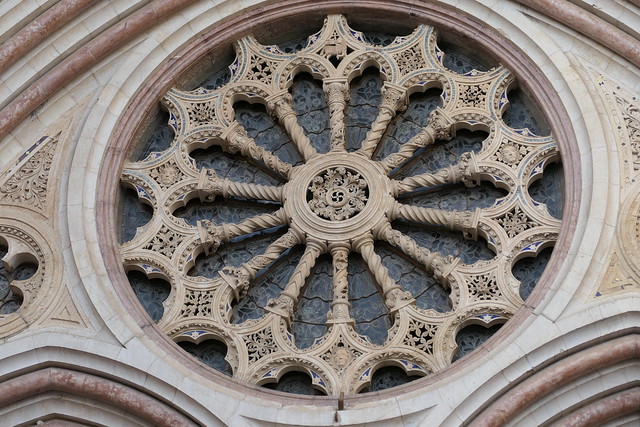
Italy trip photos
My recent trip to Italy was done to research as many medieval (and older) sites as I could hit. I saw a number of baptistries, cathedrals, churches, museums, and old cities. It was amazing.
I've made an album with some of the more interesting photos from my trip to Italy. If you want information on the photos, check out the album at Flickr.
Tuesday, 18 April 2023
Video: Monk's Modern Medieval Cuisine
I recently stumbled across a new youtube channel: Monk's Modern Medieval Cuisine. The idea is to offer 'easy' medieval recipes. I watched several of his videos and would love to try some of these myself. I love how Dr. Monk tastes the food at the end, giving some idea of what it tastes like, and thoroughly enjoying himself.
Tuesday, 29 November 2022
Book Review: Between Two Fires by Christopher Buehlman

Cons: uses slurs, some disturbing scenes
The black death rages across France as demons test God’s concern for the earth. A disgraced knight saves a young girl from his companions and, against his will, agrees to accompany her to Paris and Avignon. He quickly realizes there’s something special about her, but is she a saint or a witch?
The book is set in a historical place and time that was clearly well researched (with some good acknowledgements in the back). The author weaves in some horrifying monsters and clearly inaccurate fantasy elements that fit the medieval mindset.
The are rich descriptions of setting that allow you to vividly picture the action. Given some of the monsters this isn’t always a positive.
Thomas is a great character. He’s flawed in several ways but grows as he travels with the girl.
One main side character is gay and they encounter Jews a time or two. Be aware that several slurs are used in the text when discussing these groups that fit the time and place, but may be distressing to read. There's also the threat of sexual violence several times.
It’s a brutal look at the middle ages with some horror elements added regarding Biblically accurate angels and demons. It’s a difficult read at times, so not for everyone.
Tuesday, 1 February 2022
Book Review: A Guide to Medieval Gardens: Gardens in the Age of Chivalry by Michael Brown

Cons: superficial, some chapters could have used more depth
This is a general guide on medieval gardens, specifically in England, that consists of 13 chapters, a conclusion and a quick listing of medieval gardens in England that can be visited. The chapters are all fairly short and to the point. They are: Evidence of Medieval Gardens, Influences of European Medieval Gardens, Monastic and Sacred Gardens, Secular Gardens, Medieval Garden Features, Water in the Garden, Parks and Pleasure Parks, The Plants of the Medieval Garden, The Medieval Gardener, The Gardener’s Tools and Equipment, Cultivation Techniques, The Medieval Gardening Year and Making your own Medieval Garden.
The first few chapters give background on how we know what little we know, and what types of gardens were grown. I enjoyed the later chapters more as they got more specific regarding the types of plants you could find and going over individual tools that gardeners used.
I wished some of the sections were fleshed out more. It felt like just as you got into a topic and wanted to know more of the deeper details the chapter ended. I can understand that there’s limited information but the author worked on medieval gardens at the Prebendal Manor and I would have enjoyed hearing more about things he learned from practical experience trying out medieval tools and techniques. For example, the chapter on making your own medieval garden simply mentions having a water source and gives some general advice. There’s no sample layout with ideas of what plants fit well together. I’d have loved to see a few photos from the gardens he maintained, including what he chose to grow where).
There is a good number of colour photographs illustrating what the author is discussing. I enjoyed the mix of the author’s photos and images from medieval sources, misericords and manuscripts. Not every tool got an image, and in some cases, like the spud, I would have appreciated a photo to better understand the tool as I’ve never heard of it before and the description left me somewhat unsure of what it looked like.
If you’re new to medieval gardens this is an excellent primer that goes over the basics and then some. If you’ve read a couple of books on the topic already, some of the later chapters may still hold useful information for you.
Tuesday, 16 November 2021
Video: Medieval Bardcore Holding Out for a Hero
Two youtubers I greatly admire, Whitney Avalon and Hildegard von Blingin' teamed up to create a medieval bardcore version of Bonnie Tyler's Holding Out for a Hero. Their music video, inspired by the artwork from books of hours is fantastic.
Tuesday, 24 August 2021
Book Review: The Good Wife’s Guide - Translated by Gina Greco and Christine Rose

Cons: medieval writing tends to be dry and I found it hard to read more than a few pages at a time without a break
This is a translation of the French medieval household book Le Ménagier de Paris. It consists of an introduction, which includes background information, what life was like in Paris at the time of it’s writing, and a gloss of The Tale of Griselda. The text itself consists of several parts talking about good conduct (prayer, behaviour, dress, chastity, virtues & vices, obedience to one’s husband, etc), horticulture, choosing servants, hawking, menus, and recipes. There are introductory passages every few sections so you have a good idea of what the book will discuss next, as well as excellent page notes (many of which detail translation decisions) and a very useful glossary of culinary terms to help with the last 2 sections of the book and a bibliography.
The premise of the text is that of an older husband writing a book for his new young wife so that she will be properly trained and able to manage a household for her second husband after the author’s death. The book goes into a fair amount of detail regarding some items (there are a lot of recipes and detailed information on the virtues & vices, breaking down the various ways people sin and how it’s important to confess). There are also some long morality tales about how it’s important to obey one’s husband and be long-suffering, even if your husband tries your patience or tests you.
I found it very interesting what a woman in 14th C Paris was expected to know, even if it’s unknown if the author’s ‘young wife’ actually existed. The cooking section mentioned where to buy certain ingredients and how much they cost. The hawking section was very detailed about how much work was involved, all of which had to be done by the person intending to fly the hawk (so servants couldn’t train the bird for you). The moralistic tales are fairly long winded and get boring after a while. The Tale of Griselda is kind of infuriating as a modern reader and even the author’s response to it implies he doesn’t agree with the husband’s actions, but thought it was worth including anyway.
I wish the author had finished his planned book and included the games and entertainments he’d intended. I think those might have been quite interesting to learn about.
There’s a lot of great information here, but you’ll probably have to read it in small doses to stay engaged. The translators did a fantastic job of keeping the language easy to understand, but medieval texts tend to be on the dry side.
Tuesday, 22 June 2021
History Book Review: Bread, Wine and Money: the Windows of the Trades at Chartres Cathedral by Jane Welch Williams

Cons: some images are of poor quality, some ideas/terms could have used a bit more explanation
It’s become conventional knowledge that the trade windows at Chartres and other cathedrals were donated by members of the trade guilds that are depicted. Williams has done a thorough job in this book, published in 1993, of refuting that claim.
The book is separated into 5 chapters, with an additional introduction and epilogue. There are 4 colour plates and 151 black and white plates. There are extensive notes and a bibliography. Chapter 1 briefly examines the literature that’s been written about Chartres cathedral with regards to its stained glass (dating and program), specifically focusing on interpretations regarding the trade windows. Chapter 2 goes over the historical circumstances in Chartres around the time the cathedral was built. It details the tensions between the chapter, the bishop, the count and the townspeople (including a riot in 1210). Chapters 3-5 are analyses of windows dealing with bread, wine, and money changers in that order. They each go over what other historians have said about the windows, the historical context of those trades (bakers, tavern keepers, and money-changers) then analyzes each window that shows those trades comparing them to others within the cathedral, to those from other cathedrals, and ancient Roman works.
Williams points out very quickly that there are few if any contemporary records supporting the idea the trade windows were guild gifts. Her very thorough examination of the interrelationships of power, and how bread, wine & money (that is the cash economy as well as monetary gifts to the cathedral) were incorporated into liturgical practice within the cathedral as well as the liturgical year (in terms of taxes and ‘gifts’). The book also examined how practices changed over time (for example, how the Eucharist was given less often to regular people and eulogy bread was passed out instead).
There were a lot of black and white images, including several useful maps and floor plans of the cathedral showing where the various windows were located in the building. Some of the window photos were of poor quality so it was hard to see what the author was describing (though this is probably due as much to the state of the windows at the time the book was made).
I did find that a few terms and ideas could have used a bit more explanation. For example, the author seems to assume that the reader knows that bishops were appointed from outside the Chartres chapter rather than voted on by the canons, which likely added to the antagonism between him and the canons.
I learned a lot about church practices and how various groups in society related to each other. It’s a great reminder that people have always been complex and relationships never easy, especially where power and money are involved.
If you’re interested in the middle ages, medieval art, cathedrals or liturgical practices, this is an interesting book and, I think, proves the point the author is making. It’s given me a lot to think about with regards to how I read church windows.
Tuesday, 11 May 2021
Book Review: Lucifer: The Devil in the Middle Ages by Jeffrey Burton Russell

Cons: fair amount of repetition, some sections could have been fleshed out more
This is the third book in Russell’s history of the devil, following The Devil: Perceptions of Evil from Antiquity to Primitive Christianity and Satan: The Early Christian Tradition. (Click the titles to read my reviews of them.) It examines the development of the history and figure of the devil during the middle ages, considering issues like when and why he fell, what he looks like, what his powers are, his role in the fall of mankind and its subsequent salvation by Christ, and whether God is ultimately responsible for the devil's actions.
The book has 11 chapters: The Life of Lucifer; The Devil in Byzantium; The Muslim Devil; Folklore; Early Medieval Diabology; Lucifer in Early Medieval Art & Literature; The Devil and the Scholars; Lucifer in High Medieval Art & Literature; Lucifer on the Stage; Nominialists, Mystics, & Witches; and The Existence of the Devil. The book also has an essay on the sources used, a bibliography and an index.
Due to the nature of the topic and how people and institutions wrote either building on the past or opposing the writings of others (writings that were deemed heretical), there’s a fair amount of repetition. It’s really interesting seeing the slow development of ideas. The book focuses mainly on the timeline of the fall of the devil & the evil angels (at the time of creation, sometime later) and the image and powers of the devil.
I’d have liked longer chapters on the Muslim devil and Byzantium as I don’t know as much about those areas of belief and his examination of them was very superficial.
The book includes a decent number of black and white photographs to help visualize the subject matter.
This is the third book in Russell’s history of the devil, following The Devil: Perceptions of Evil from Antiquity to Primitive Christianity and Satan: The Early Christian Tradition. (Click the titles to read my reviews of them.) It examines the development of the history and figure of the devil during the middle ages, considering issues like when and why he fell, what he looks like, what his powers are, his role in the fall of mankind and its subsequent salvation by Christ, and whether God is ultimately responsible for the devil's actions.
The book has 11 chapters: The Life of Lucifer; The Devil in Byzantium; The Muslim Devil; Folklore; Early Medieval Diabology; Lucifer in Early Medieval Art & Literature; The Devil and the Scholars; Lucifer in High Medieval Art & Literature; Lucifer on the Stage; Nominialists, Mystics, & Witches; and The Existence of the Devil. The book also has an essay on the sources used, a bibliography and an index.
Due to the nature of the topic and how people and institutions wrote either building on the past or opposing the writings of others (writings that were deemed heretical), there’s a fair amount of repetition. It’s really interesting seeing the slow development of ideas. The book focuses mainly on the timeline of the fall of the devil & the evil angels (at the time of creation, sometime later) and the image and powers of the devil.
I’d have liked longer chapters on the Muslim devil and Byzantium as I don’t know as much about those areas of belief and his examination of them was very superficial.
The book includes a decent number of black and white photographs to help visualize the subject matter.
The section on witches was interesting as it focused on how preachers kept the fire and brimstone ideas of the devil alive even as theological discourse around evil was slowly letting ideas of the devil fade in importance.
The book pointed out a lot of interesting information about how Christian thinkers in the middle ages approached ideas of evil, the devil and God’s omnipotence. Despite the level of repetition, it’s a fascinating book.
The book pointed out a lot of interesting information about how Christian thinkers in the middle ages approached ideas of evil, the devil and God’s omnipotence. Despite the level of repetition, it’s a fascinating book.
Tuesday, 15 December 2020
History Book Review: Paris, 1200 by John Baldwin

Cons: would have liked more information regarding festivities
The book focuses on the events in and around Paris around the year 1200. Since there aren’t a lot of documents detailing that specific year, the author pulls information from the decades before and afterwards. After the prologue there are 6 chapters and an epilogue. The chapters are: The City and its Bourgeoisie; The face of Pierre the Chanter and Philip Augustus and the Hidden Visages of Women; King Philip and his Government; The Church, Clergy and Religious Life; The Schools; and Delight and Pain.
I found the first two chapters a little boring, being very detailed explanations of the various important nobles and churchmen of the day. I did enjoy the section on women, though due to a paucity of source material it’s less about actual women and more about sculptures depicting allegorical women (like Ecclesia and Synagoga). The government chapter was hit and miss with regards to my personal interest though if you’re researching bureaucracy in the middle ages, it’s an excellent chapter. The later chapters were very interesting for me, particularly the sections on how mass was performed and the seating arrangement in the choir at Notre-Dame de Paris. For most of the book the author fudged the year, bringing in information from as early as the 1180s and ending around 1215, with the fourth Laterin council. I was a little disappointed that the author stuck to the single year when talking about holidays and festivals, as the city was under papal interdict for most of the year and so wasn’t allowed to celebrate Easter, weddings or other major festivities. Christmas celebrations got a minor explanation but again, I’d have liked more.
There’s a handful of black and white images, including some nice panels from a Bible Moralisée made around that time, and some stained glass and sculpture photographs.
Paris is a fascinating city and it’s cool reading a book dedicated to a single year in it. There’s a wealth of minor details regarding life at the time (like the debate over whether prostitutes should be allowed to donate a window in the cathedral), and at the end of the book I felt like I had a fair grasp on what life was like there.
If you like the middle ages and want more detailed information about city life, universities, and government, it’s a good book.
Tuesday, 15 September 2020
Book Review: Power and Profit: The Merchant in Medieval Europe by Peter Spufford

Cons: dense, took me several weeks to read
The book consists of 8 chapters: The transformation of trade; Courts and consumers; From court to counting house; Helps and hindrances to trade; Trade in manufactured goods; Trade in foodstuffs, raw materials and slaves; Imbalances in trade; and Conclusion: the pattern of trade.
The book on the whole goes into the nitty gritty of all aspects of trade, so if you’re not interested in how long it took for couriers to go from one place to another vs the same route travelled by a 4 wheeled wagon, 2 wheeled wagon, or pack animal, then this isn’t for you.
I found the writing style rather dry and academic at times. At other times it grabbed my interest, even if the section wasn’t on a topic I was particularly interested in. For example, I found the sections of the cost of road maintenance and who was expected to perform and pay for it really interesting.
Each chapter is subdivided, though unless you know where the information you want is located, you may not find it easily. For example, the section on how quickly couriers can travel isn’t in the same chapter as that of wheeled wagons, though the author does put in page numbers at times to help you find complementary information. I tried to return to an interesting paragraph about bridge building done by merchants and experienced some frustration as it wasn’t in any of the sections labelled as being about bridges, but in a section called ‘Commercial pressure for improvement’.
If trade in the middle ages is of particular interest to you than you will learn a lot about it here. If you’re interested in fleshing out a novel, again, there are some real gems though you may find it a bit tiresome locating them.
A few things I learned: some merchants paid innkeepers to store and repack good, then arrange transit to the next inn. Rooms in inns contained several beds separated by curtains and travellers found themselves sharing beds with strangers. Merchants braved passes in the Alps during the winter, even when the passes were dangerous. In some cases merchant houses paid for repairs (and even the building) of bridges if the communities responsible for them neglected them. Cities quickly grew up around fairs, and died out quickly if those fairs moved. Though inns were profitable businesses, hospices (hostels for pilgrims or the poor/hospitals), even when properly run, were not. Slaves were traded by Southern Italians from the 1300s on, and owning them was only illegal if they were Christians (and some, captured in the Balkans, were). The children of slaves were free, so there was no ‘self-perptuating’ market.
Chapter 5 on where and how trade goods were manufactured was very interesting. Each section was fairly short but packed in a ton of information. Chapter 6 on bulk trade items (things like raw wool and grain) was also interesting, talking about which goods were worth transporting and how larger cities needed to import food as the local areas couldn’t support them.
The book has a large number of black and white as well as colour images illustrating medieval processes. These are often later woodcuts, manuscript images or close-ups of the background in paintings where painters added scenes from daily life. There is also a lot of maps so it’s easy to understand the various trade routes and manufacturing centres.
It took a while to read as the information is very dense, but it’s worth the time and effort and you’ll come away knowing a lot more about the interconnectedness of the medieval world.
The book consists of 8 chapters: The transformation of trade; Courts and consumers; From court to counting house; Helps and hindrances to trade; Trade in manufactured goods; Trade in foodstuffs, raw materials and slaves; Imbalances in trade; and Conclusion: the pattern of trade.
The book on the whole goes into the nitty gritty of all aspects of trade, so if you’re not interested in how long it took for couriers to go from one place to another vs the same route travelled by a 4 wheeled wagon, 2 wheeled wagon, or pack animal, then this isn’t for you.
I found the writing style rather dry and academic at times. At other times it grabbed my interest, even if the section wasn’t on a topic I was particularly interested in. For example, I found the sections of the cost of road maintenance and who was expected to perform and pay for it really interesting.
Each chapter is subdivided, though unless you know where the information you want is located, you may not find it easily. For example, the section on how quickly couriers can travel isn’t in the same chapter as that of wheeled wagons, though the author does put in page numbers at times to help you find complementary information. I tried to return to an interesting paragraph about bridge building done by merchants and experienced some frustration as it wasn’t in any of the sections labelled as being about bridges, but in a section called ‘Commercial pressure for improvement’.
If trade in the middle ages is of particular interest to you than you will learn a lot about it here. If you’re interested in fleshing out a novel, again, there are some real gems though you may find it a bit tiresome locating them.
A few things I learned: some merchants paid innkeepers to store and repack good, then arrange transit to the next inn. Rooms in inns contained several beds separated by curtains and travellers found themselves sharing beds with strangers. Merchants braved passes in the Alps during the winter, even when the passes were dangerous. In some cases merchant houses paid for repairs (and even the building) of bridges if the communities responsible for them neglected them. Cities quickly grew up around fairs, and died out quickly if those fairs moved. Though inns were profitable businesses, hospices (hostels for pilgrims or the poor/hospitals), even when properly run, were not. Slaves were traded by Southern Italians from the 1300s on, and owning them was only illegal if they were Christians (and some, captured in the Balkans, were). The children of slaves were free, so there was no ‘self-perptuating’ market.
Chapter 5 on where and how trade goods were manufactured was very interesting. Each section was fairly short but packed in a ton of information. Chapter 6 on bulk trade items (things like raw wool and grain) was also interesting, talking about which goods were worth transporting and how larger cities needed to import food as the local areas couldn’t support them.
The book has a large number of black and white as well as colour images illustrating medieval processes. These are often later woodcuts, manuscript images or close-ups of the background in paintings where painters added scenes from daily life. There is also a lot of maps so it’s easy to understand the various trade routes and manufacturing centres.
It took a while to read as the information is very dense, but it’s worth the time and effort and you’ll come away knowing a lot more about the interconnectedness of the medieval world.
Thursday, 27 August 2020
Shout-Out: Divine Heretic by Jaime Lee Moyer

But things are not always as they appear.
Jeanne d'Arc was only five when three angels and saints first came to her. Shrouded by a halo of heavenly light, she believed their claim to be holy. The Archangel Michael and Saint Margaret told her she was the foretold Warrior Maid of Lorraine, fated to free France and put a king upon his throne.
Saint Catherine made her promise to obey their commands and embrace her destiny; the three saints would guide her every step. Jeanne bound herself to these creatures without knowing what she'd done. As she got older, Jeanne grew to mistrust and fear the voices, and they didn't hesitate to punish her cruelly for disobedience. She quickly learned that their cherished prophecy was more important than the girl expected to make it come true.
Jeanne is only a shepherd's daughter, not the Warrior Maid of the prophecy, but she is stubborn and rebellious, and finds ways to avoid doing - and being - what these creatures want. Resistance has a terrifying price, but Jeanne is determined to fight for the life she wants.
But when the cost grows too high, Jeanne will risk everything to save her brother, her one true friend and the man she loves.
Not everyone is destined to be a hero. Sometimes you have no choice.
Friday, 21 August 2020
Homemade Wax Tablet
Sometimes it's fun to recreate historical items to see how they really worked.
A while back I saw several people make wax tablets and thought that would be a cool activity. A LONG time ago I made rolled beeswax candles and still had them, so getting the wax was easy. (To make these, you roll sheets of beeswax around a wick.) I considered (and even started) carving a tablet base, but found a suitable wood piece at the dollar store in the lid of a small jewelry box. I unscrewed the lid, sanded the sides and filled in the holes with wood glue. I then painted the entire thing in a coffee stain (which made it feel grainy so I probably wouldn't do that again). I varnished it to keep the stain in and then got to melting my wax. I used a silicone cup in a pot of water as my double boiler. It took longer for the wax to melt than I expected and I had to do it three times to fill my tablet. I probably used around 1 cup of wax for this.
Here you can see the tools I used:

I used all of a black candle and half of a dark blue one, giving me a fairly dark writing space. The wax is denser than I expected, harder to scrape (though I don't have a proper tool). I was surprised how quickly - and how much - wax built up on the writing tool I used (I tried with a matchstick and then a crafting tool that has a small ball on the end). I wonder if proper styli had a way of dealing with this.

I'm using my heat gun to reset the top layer of wax. It appears you'd lose a layer of wax each time you change your message. But your message will stay there unless it gets very hot or you scrape it off. I wonder if people kept a jar for the wax they remove so they can melt it and add it back on...
Tuesday, 14 July 2020
Video: Hildegard von Blingin'
Saw this recently and just had to share it. Hildegard von Blingin's youtube channel is pretty new but their song rewritings, turning modern pop songs into medieval lays, is awesome.
Subscribe to:
Posts (Atom)